
8.7K
Downloads
69
Episodes
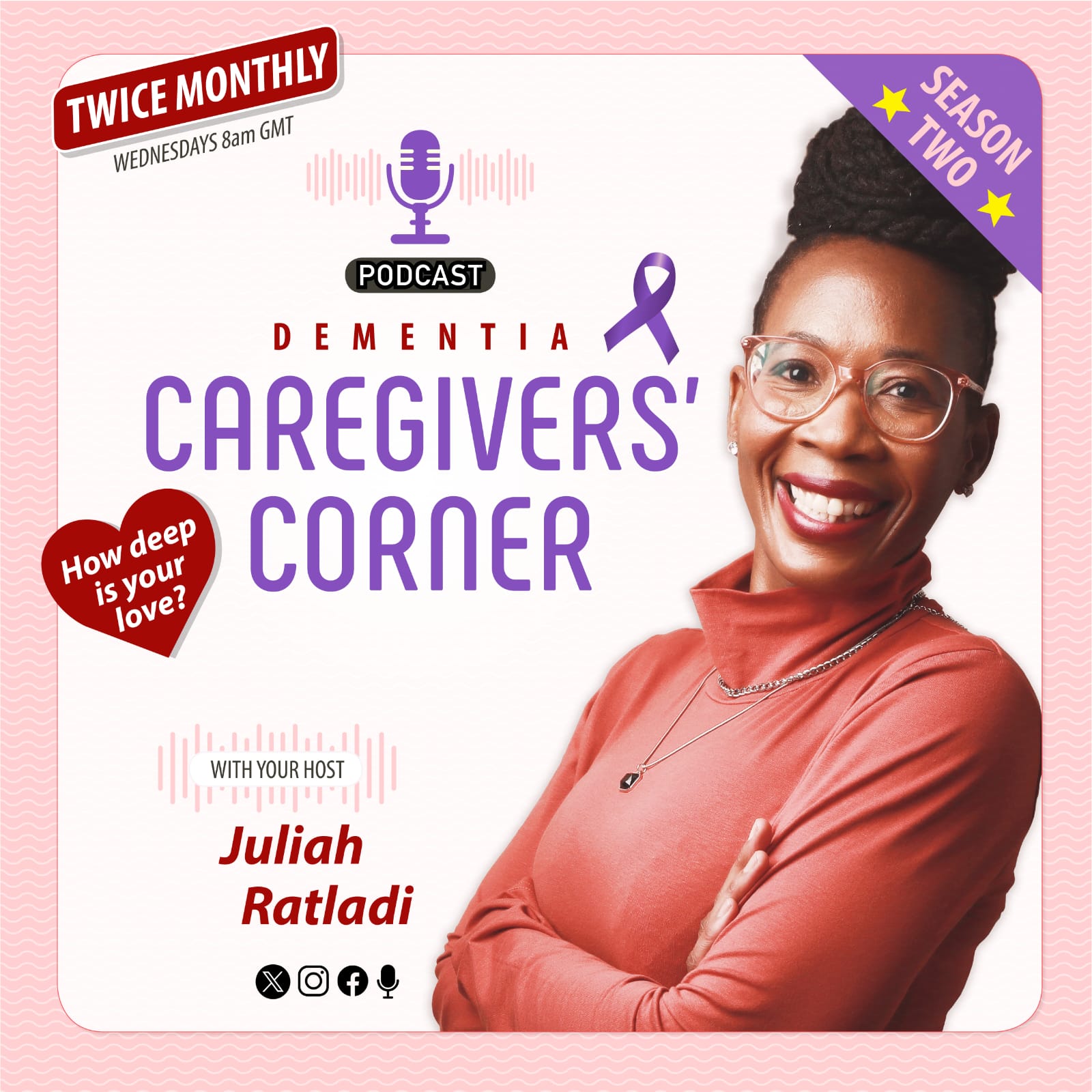
The journey of caring for a loved one with dementia can be deeply challenging. Juliah Ratladi, an MSc Dementia Care Specialist and experienced dementia care professional, is uniquely positioned to share her observations, experiences, knowledge, and insights on various aspects of dementia care. Together with other dementia experts and caregivers, she raises awareness, offers encouragement, and provides hope. Through meaningful discussions, they shed light on key dementia-related issues, helping to educate and support those affected by the condition. Dementia care: How deep is your love?
Episodes

3 hours ago
3 hours ago
44 min
Episode Title: When the Eyes and Brain See Differently: Understanding Vision Changes in Dementia
Repost: Vision changes in dementia can go far beyond poor eyesight. A person may be able to see clearly, yet struggle to interpret what they are seeing.
In this episode, Juliah Ratladi is joined by Advanced Clinical Practitioner and Independent Prescribing Optometrist David Knight to explore the complex relationship between vision, perception and dementia.
Drawing on clinical expertise and real-life caregiving experiences, they discuss how different dementias can affect visual perception, whether poor eyesight may contribute to cognitive decline, challenges with vision assessments, and practical changes families can make at home to improve safety and independence.
A fascinating conversation for families, caregivers and healthcare professionals who want to understand why, in dementia, seeing isn't always as simple as what meets the eye.

Aug 26, 2026
Aug 26, 2026
49 min
Episode Title: Daughter or Caregiver? Donna Houston on Loving a Mum with Dementia
Repost: What happens to the mother–daughter relationship when dementia enters the family?
In this episode of the Dementia Caregivers’ Corner Podcast, Donna Houston shares her experience as the daughter of renowned dementia activist Agnes Houston MBE, who was diagnosed with early-onset Alzheimer’s at the age of 57.
Donna reflects on the early signs before her mum’s diagnosis, the challenges they faced navigating a system that did not always provide the support they needed, and how they made a conscious decision to face dementia together.
We also explore an important question for families: Should adult children become caregivers for a parent living with dementia? Donna shares her perspective on balancing being a daughter with providing care, protecting their relationship, and what nearly two decades alongside dementia have taught her about love, family and resilience.
🎧 Tune in for an honest daughter’s perspective on what it means when dementia becomes part of family life.
Dementia care. How deep is your love?

Aug 12, 2026
Aug 12, 2026
35 min
Episode Title: Dementia Is More Than Memory: Agnes Houston MBE on the Sensory Side of Dementia
Repost: When we talk about dementia, memory loss is often the first thing that comes to mind. But dementia can also change the way a person sees, hears, tastes, smells, touches and makes sense of the world around them.
These sensory and perceptual changes can have a profound impact on everyday life, yet they remain one of the less understood and less discussed aspects of dementia...
A Question for Our Listeners
After listening to Agnes, think about a behaviour you have seen in someone living with dementia that you previously found difficult to understand.
Could sound, sight, touch, taste, smell or the way they perceive their surroundings have played a part?
Sometimes understanding what the person may be experiencing is the beginning of understanding the behaviour.
🎙️ Dementia Caregivers’ Corner Podcast
If you enjoyed this conversation or know someone who could benefit from understanding the sensory side of dementia, please share this episode.
And if you enjoy the podcast, please consider leaving a review. Every review and share helps us reach more families, caregivers, professionals and communities with dementia education and awareness.
Until next time, take care, and bye for now!
#DementiaCaregiversCorner #AgnesHoustonMBE #DementiaAwareness #SensoryChanges #DementiaCare

Jul 29, 2026
Jul 29, 2026
38 min
Episode Title: Can Technology Close the Dementia Care Gap? A Conversation with Allyson Schrier, Co-founder of Zinnia TV
Can technology make everyday life easier for people living with dementia and those who care for them?
In this episode of the Dementia Caregivers' Corner Podcast, I speak with Allyson Schrier, caregiver, dementia advocate, and co-founder of Zinnia TV—a pioneering AgeTech platform designed to enrich the lives of people living with dementia through engaging, dementia-friendly video content.
After caring for her husband, Allyson transformed her personal experience into an innovative solution that is helping families, caregivers, and care providers around the world create more meaningful moments while reducing stress.
In this episode, we discuss:
-
How Allyson's caregiving journey inspired the creation of Zinnia TV.
-
The role of technology in supporting people living with dementia.
-
Simple ways to make digital tools accessible for older adults.
-
Why compassionate, person-centred care should always come before technology.
-
The importance of culturally inclusive dementia care for diverse communities, including immigrant and African families.
-
The exciting future of AgeTech and how innovation is shaping dementia care.
Key Takeaways
✅ Great innovations often begin with lived experience.
✅ Technology should enhance human connection—not replace it.
✅ Compassion remains the most powerful tool in dementia care.
✅ Inclusive technology ensures every family can benefit, regardless of culture or language.
Whether you're a family caregiver, healthcare professional, dementia advocate, or simply interested in how innovation is transforming dementia care, this conversation is packed with practical insights and inspiration.
If you enjoyed this episode, please follow, rate, and review the Dementia Caregivers' Corner Podcast on your favourite podcast platform. Your support helps us reach more families and raise dementia awareness around the world.
Please share this episode with someone who could benefit from learning how technology and compassion can work together to improve the lives of people living with dementia and those who care for them.

Jul 15, 2026
Jul 15, 2026
37 min
Episode Title: The Dementia and Death Conversation: Why Waiting Can Cost Families
Death is one of the few certainties in life, yet it remains one of the conversations many of us avoid.
In this thought-provoking episode of the Dementia Caregivers Corner Podcast, Juliah Ratladi is joined by hospice social worker Lisa Pahl, who has spent nearly two decades supporting individuals and families through some of life's most challenging moments. Drawing on her experience in hospice care and emergency medicine, Lisa shares why talking about death isn't about giving up hope—it's about giving people a voice while they still have one.
The conversation explores the importance of advance care planning, particularly for people living with dementia, where the opportunity to express wishes can gradually be lost. Lisa also discusses the inspiration behind the Death Deck, the End-of-Life (EOL) Deck, and the Dementia Deck—innovative conversation tools designed to help families navigate topics that are often difficult to begin.
Together, Juliah and Lisa discuss cultural attitudes toward death, why many families avoid these conversations, how to introduce advance care planning compassionately, and why meaningful conversations today can prevent uncertainty and distress tomorrow.
Whether you're a family caregiver, healthcare professional, or simply someone who wants to prepare for the future with confidence, this episode offers practical guidance and gentle encouragement to start the conversations that matter most.
Because peace at the end often begins with conversations held long before the end.
5 Key Takeaways
- Dementia makes timing important.
Dementia gradually affects a person's ability to communicate their wishes. Having conversations early allows individuals to express what matters most while they still can. - Avoiding the conversation doesn't avoid the reality.
Many families postpone talking about death because of fear, culture, or discomfort, but delaying these discussions often leaves loved ones facing difficult decisions without knowing what the person would have wanted. - The right tools make difficult conversations easier.
Resources such as the Death Deck, End-of-Life Deck, and Dementia Deck provide gentle prompts that help families begin meaningful conversations without feeling overwhelmed. - Culture should shape the conversation—not prevent it.
Every family and community approaches death differently. Respecting cultural beliefs while encouraging open dialogue helps ensure care planning remains personal, meaningful, and respectful. - Advance care planning is a gift to those you love.
Planning ahead isn't about preparing for death; it's about reducing uncertainty, protecting your wishes, and giving your family confidence and peace when difficult decisions arise.
To learn more about Lisa's End-of-Life Deck and Dementia Deck, or to purchase a copy, visit thedeathdeck.com.

Jul 1, 2026
Jul 1, 2026
42 min
Episode Summary
Designing for Dementia: How Smart Technology and Environments Support Sensory Changes | Professor Andrea Tales
Repost: In this episode, I am honoured to be joined by Professor Andrea Tales, Professor of Neuropsychology and Dementia Research at Swansea University, Fellow of the British Psychological Society, and Fellow of the Learned Society of Wales.
Together, we explore why dementia should be understood as more than a memory disorder. Drawing on research from her co-authored book, A New Approach to Dementia: Examining Sensory and Perceptual Impairment, Professor Tales explains how changes in vision, perception, and sensory processing can profoundly affect the daily lives of people living with dementia.
Using real-life caregiving experiences, we discuss how visual perception changes may explain behaviours that are often misunderstood, why thoughtful environmental design matters, and how SMART technologies such as Alexa and digital clocks can support independence, reduce distress, and improve quality of life when tailored to the individual.
Whether you are a family caregiver, healthcare professional, or simply interested in understanding dementia more deeply, this episode offers practical, evidence-based insights that could transform the way you think about dementia care.
Five Key Takeaways
- Dementia is more than memory loss. Changes in vision, perception, balance, and sensory processing can have a significant impact on behaviour, independence, and quality of life.
- What looks like challenging behaviour may actually be a sensory or perceptual difficulty. Understanding how the person experiences their environment helps caregivers respond with greater empathy and compassion.
- Thoughtful environmental design matters. Simple changes to lighting, colour contrast, flooring, and familiar surroundings can reduce confusion, distress, and the risk of falls.
- SMART technology works best when it is personalised. Devices such as Alexa, digital clocks, and other assistive technologies should be introduced based on the person's individual needs, abilities, and stage of dementia—not because they worked for someone else.
- Technology should enhance, not replace, human care. The greatest benefits are seen when technology supports meaningful relationships, person-centred care, and everyday independence.
Throughout the conversation, I also share real-life experiences from my own dementia care journey, highlighting how understanding sensory changes transformed the way I supported people living with dementia.

Jun 10, 2026
Jun 10, 2026
41 min
Episode Title: When Reality Changes: Understanding Lewy Body Dementia Through a Caregiver's Eyes | Kathy Teyler Jarrett
In this episode of the Dementia Caregivers Corner Podcast, I am joined by Kathy Teyler Jarrett, author of You Are Not Alone: Dealing with Lewy Body Dementia and a passionate advocate for Lewy Body Dementia (LBD) awareness.
Kathy shares her deeply personal journey as the primary caregiver for her husband, offering invaluable insight into a form of dementia that is often misunderstood and overlooked. We discuss the early warning signs, the challenges of obtaining a diagnosis, and the complex symptoms that make Lewy Body Dementia unique, including hallucinations, sleep disturbances, and changes in movement.
Kathy recounts the frightening incident that became a turning point in recognising that something was seriously wrong, and she reflects on the realities of navigating daily life as a caregiver. We also explore the overwhelming amount of information available to caregivers and how to identify practical support that truly makes a difference.
Finally, Kathy speaks candidly about life after caregiving, sharing how she rebuilt a sense of purpose following her husband's death and why she felt compelled to write her book to support others walking a similar path.
This is a powerful conversation about resilience, education, and the importance of ensuring that no caregiver feels alone.
Three Main Takeaways
1. Lewy Body Dementia is often misunderstood and difficult to recognise.
Many people, including caregivers, have never heard of LBD before it affects their family. Understanding its unique symptoms—such as hallucinations, fluctuating cognition, movement difficulties, and sleep disturbances—can help families seek support earlier.
2. Caregivers need practical guidance, not just information.
The dementia journey can be overwhelming. Kathy highlights the importance of finding trusted resources, learning from lived experience, and focusing on strategies that are realistic and helpful for individual caregiving situations.
3. Life after caregiving requires healing and rediscovery.
When caregiving becomes someone's identity, its end can leave a profound void. Kathy's story demonstrates that it is possible to find purpose again while honouring the person and journey that shaped your life.

May 27, 2026
May 27, 2026
37 min
Podcast Episode Summary
Episode Title: Dementia in Africa: The Conversations We Need to Have
In this episode, we explore the realities of living with dementia and caregiving in African communities through a heartfelt conversation with Julia Mogotsi from Gaborone, Botswana. The discussion highlights the different types of dementia, the lack of adequate support following diagnosis, and how families are often left to navigate the journey alone.
We reflect on the progression of dementia over time, especially during and after the COVID era, and the emotional impact it has on both the person living with dementia and their caregivers. The episode also examines the unique challenges dementia caregivers face — from wandering and aggression to hallucinations, emotional burnout, and balancing work responsibilities.
The conversation further focuses on the urgent need for dementia awareness across Africa, where stigma, misinformation, and cultural beliefs continue to place vulnerable older people at risk of neglect, abuse, and even death. Through real-life stories from Botswana, Namibia, and South Africa, the episode calls for communities, leaders, neighbours, employers, and health professionals to work together in creating understanding, compassion, and protection for people living with dementia.
This is an emotional but important conversation aimed at encouraging awareness, support, and honest dialogue about dementia in African communities.
5 Key Takeaways
- Dementia is not one condition
Just like cancer, dementia comes in different types, with Alzheimer’s disease being the most common. - Families often feel unsupported after diagnosis
Many caregivers receive little guidance, education, or emotional support once a loved one is diagnosed. - Caregiving for dementia is emotionally and physically demanding
Caregivers often deal with wandering, aggression, confusion, hallucinations, and burnout while trying to balance everyday life and work. - Community awareness is urgently needed in Africa
Misunderstanding dementia can lead to stigma, neglect, abuse, and harmful accusations such as witchcraft. - Education and compassion can change lives
Involving neighbours, community leaders, employers, and health professionals can help create safer and more supportive environments for people living with dementia and their caregivers.
Dementia Caregivers Corner Podcast
dementiacaregiverscorner’s Podcast
The journey of caring for a loved one who is living with Dementia can be quite challenging. Juliah Ratladi is an MSc student in the field of Dementia, and yet a Practising Dementia Caregiver. Juliah is uniquely positioned to share observations, experiences, knowledge, understanding and insights on a variety of issues in the Dementia and Mental Health space. Together with other Caregivers and Dementia Experts, they create public awareness, and share the impromptu beautiful moments they encounter from day to day. The discussions will leave you refreshed, smiling and uplifted.